Before the First Sketch: What Really Happens When You Sit Down With an Architect
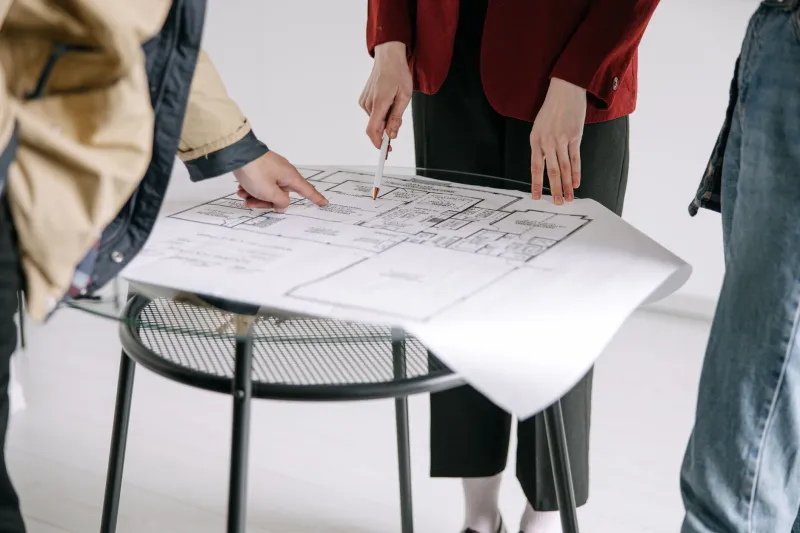
The first meeting with an architect is often imagined as something formal and slightly intimidating: a conference table, a stack of drawings, a professional waiting to judge your budget or your taste. In practice, it is closer to a structured conversation—a chance for both parties to decide whether a project is worth pursuing and whether the relationship is the right fit.
For homeowners contemplating a renovation and small business owners planning a new office or storefront, understanding what actually happens in that first hour removes much of the hesitation that keeps good projects from ever beginning.
It Starts With Listening, Not Drawing
Contrary to what many clients expect, no design work happens in the first meeting. The purpose is discovery. A good architect will spend most of the session asking questions rather than presenting ideas: Why now? What isn't working in the current space? Who uses the building, and how? What has to be true five years from now for this project to be considered a success?
These questions are not small talk. They establish the program—the underlying set of needs a design must satisfy—and they often surface priorities the client hadn't articulated. A business owner who says they need more square footage may, after twenty minutes of conversation, realize the real issue is circulation and storage. A homeowner focused on a bigger kitchen may discover the true frustration is a lack of connection between the kitchen and the rooms where family actually gathers.
What to Bring to the Table
Clients who arrive prepared get far more out of the first meeting. None of it needs to be polished:
- Photographs of the existing site or building, including problem areas, not just flattering angles
- A rough budget range, even a wide one—this single piece of information shapes every recommendation that follows
- A timeline, including any hard deadlines such as a lease expiring or a growing family
- Inspiration images, whether from magazines, Pinterest, or buildings in your own town you've always admired
- Documents, if available: a survey, deed restrictions, photos from a home inspection, or a landlord's letter of authorization
Equally important is what not to bring: a fixed solution. Clients who arrive committed to a specific layout or addition type limit the range of possibilities an architect can offer. Arriving with problems is more productive than arriving with answers.
The Questions You Should Be Asking
The first meeting is a two-way evaluation, and clients should interview the architect with the same seriousness. Reasonable questions include:
- Have you completed projects of similar size, type, and budget?
- Who will actually work on my project day to day?
- How do you structure fees, and what services does the fee include?
- What does your typical timeline look like from first meeting to construction?
- How do you handle change orders and disagreements with contractors?
The answers reveal as much as any portfolio. A firm that describes a clear process, explains fee structure without hedging, and is candid about potential complications is demonstrating exactly the kind of transparency a months-long project will require.
Fees and Timelines, Stated Plainly
Fee structures in American residential and small commercial practice generally fall into three categories: a percentage of construction cost (commonly in the range of 8–15% depending on project complexity), a fixed lump sum, or an hourly rate for defined phases. Many firms use a hybrid—hourly during early design, fixed once scope is clear.
A realistic timeline for a custom residential project runs considerably longer than most clients expect. Programming and schematic design may take one to three months, design development and construction documents another three to six, permitting another month or more depending on the jurisdiction, and construction itself anywhere from six months to two years. A first meeting is the right place to hear an honest version of this schedule rather than an optimistic one.
What You Should Leave With
A productive first meeting should end with clarity on three points: whether your project seems feasible within your budget, what the logical next step is (often a feasibility study, a measured site visit, or a proposal for design services), and whether the personalities in the room work well together. That last point matters more than it sounds. Architecture is a collaboration measured in months and measured decisions; a client who feels heard in the first hour is far more likely to feel heard in the twelfth month.
The First Step Is the Smallest One
There is a persistent belief that one should have everything figured out before calling an architect—that the project must be fully formed, the budget certain, the plans legible. The opposite is true. Architects are trained to take ambiguity and give it shape. The first meeting exists precisely for people at the beginning, with more questions than answers.
For anyone who has circled a long-imagined project for years without acting, that first conversation is the least expensive, lowest-commitment step available—and often the one that finally sets the project in motion.