The Unfinished Sentence: What Clients Reveal Only After the Drawings Begin
There is a familiar rhythm to the early stages of an architectural commission. The first meeting is polished. Clients arrive with folders of inspiration images, a rehearsed list of requirements, and a general sense of what they believe they are supposed to want from an architect. We hear about open-concept kitchens, spa bathrooms, and the vague but persistent desire for 'more light.'
Then, three or four weeks later, something shifts. A client lingers at the end of a design review and mentions, almost apologetically, that the formal dining room they insisted upon has been used twice in six years. Another admits they sprint through the hallway by the bedrooms because the ceiling feels too low. A homeowner confesses that the guest suite they requested is really a placeholder for an aging parent who may — or may not — move in.
These are the moments when the real project announces itself.
The Performance of the First Meeting
No one should be blamed for this. The initial conversations between client and architect are, by nature, performances. Clients want to appear decisive; architects want to appear responsive. Both parties are eager to justify the engagement, so everyone moves quickly toward a program — a list of rooms, square footages, and finishes — before anyone has examined the assumptions underneath it.
The trouble is that a building designed around a performed wish list will always feel slightly off, the way a suit fits well but not quite right. The proportions are correct. The materials are handsome. And yet the house never quite settles into the life happening inside it.
At our practice, we have come to believe that this gap is not a flaw in clients. It is a flaw in the process. Most firms ask clients to articulate needs before those needs have had time to surface. The solution is not more questioning. It is more waiting.
Building In the Second Conversation
We now treat the weeks between schematic sketches as a deliberate phase — an institutionalized pause in which the client is invited, explicitly, to revise what they said at the start. We call it the second conversation, and we tell clients up front that we expect it. Naming it changes its character. A client who has been told their first answers are provisional will offer corrections without embarrassment. A client who has not will often hold their doubts privately until it is too late to act on them.
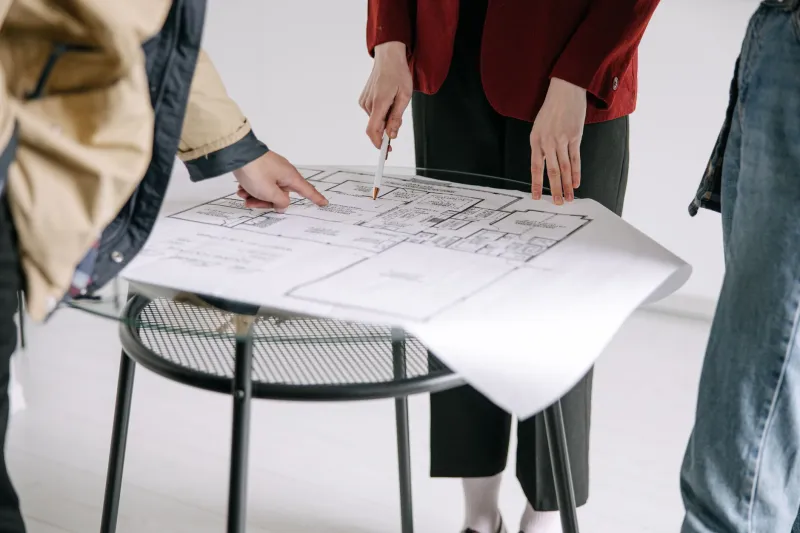
The second conversation works because design review is a different kind of thinking than conversation. When a client stands in front of a plan and sees the guest room drawn adjacent to the primary suite, the abstraction collapses. Suddenly the question is no longer 'Do we want a guest room?' but 'Who is actually going to sleep here, and how often?' Drawings, in this sense, are not documentation of decisions. They are instruments for discovering what the decisions should have been.
Some of the best spaces we have produced began as revisions during this phase. A covered porch added after a client mentioned avoiding the backyard in summer. A laundry relocated after a client admitted the basement route felt like a chore. None of these appeared on any initial program. All of them became features the clients later described as the ones they could not live without.
How to Recognize What You Have Not Said
For clients preparing to work with an architect, the honest question is not 'What do I want?' but 'What have I not yet admitted?' A few patterns are worth watching for:
- The room you describe in the future tense. If every mention of a space is framed around eventual use — someday, when we entertain more — treat that as data, not commitment.
- The route you avoid. The path through your current home that you unconsciously bypass is telling you something no inspiration board will.
- The requirement you inherited. Square footage targets and room counts borrowed from previous homes, neighbors, or the last decade of shelter magazines deserve scrutiny before they deserve walls.
Bring these observations to your architect late and without apology. A practice worth hiring will welcome the revision. Indeed, an architect who seems irritated by your second thoughts in week four is telling you something important about week forty.
Designing for the Confession
The deeper lesson extends beyond process into philosophy. Buildings endure for generations, but the people who commission them know themselves imperfectly at the moment of commissioning. A design that cannot absorb the client's own late-arriving self-knowledge is brittle, however beautiful. The architecture that lasts is the kind built on what people actually do — the shortcut, the unused room, the hallway walked quickly — rather than on what they believed they ought to want.
So we schedule the second conversation. We leave room in the timeline for it. And we listen more carefully in week five than in week one, because by then, the performance is over and the truth, unglamorous and specific, is finally on the table.